
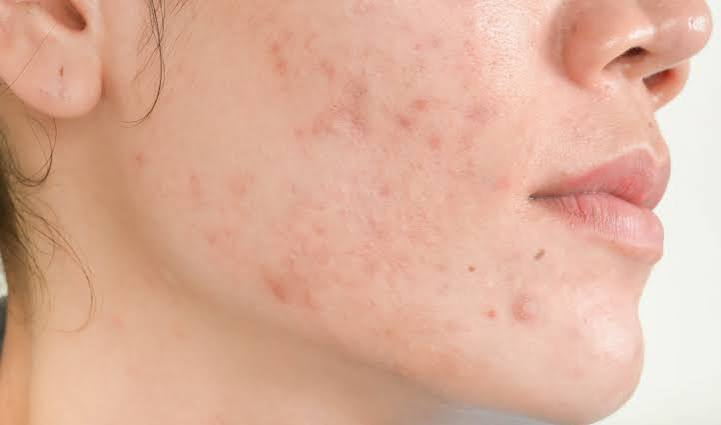
Acne can be frustrating enough while it’s active, but for many people, the scars it leaves behind become the longer-term concern. Whether it’s shallow indentations, uneven texture or lingering marks that don’t seem to fade, acne scars can affect the way skin looks and feels for years.
One of the biggest misconceptions is that all acne scars are the same. In reality, there are several different types, and this is why there is no single treatment that works for everyone. Two of the most commonly recommended options are chemical peels and microneedling, but they improve acne scars in very different ways.
At Fountain of Youth in Salisbury, we often see patients who have researched one treatment online only to discover another may be more suitable once their skin has been properly assessed. Understanding how each treatment works is the first step towards choosing the right approach.
Why do acne scars develop?
Acne scars develop when inflammation damages the deeper layers of the skin. As spots heal, the body produces collagen to repair the damaged tissue. If too little collagen is produced, the skin may heal with depressions or indentations. If too much collagen develops, raised scars can form, although these are less common.
It is also important to recognise that not every mark left behind after acne is actually a scar.
Many patients are concerned about flat red or brown marks that remain after spots have healed. These are known as post-inflammatory erythema and post-inflammatory hyperpigmentation. Unlike true scars, these changes affect skin colour rather than skin texture and often respond to different treatments.
Understanding the difference between pigmentation and genuine scarring is one of the most important parts of selecting the most appropriate treatment.
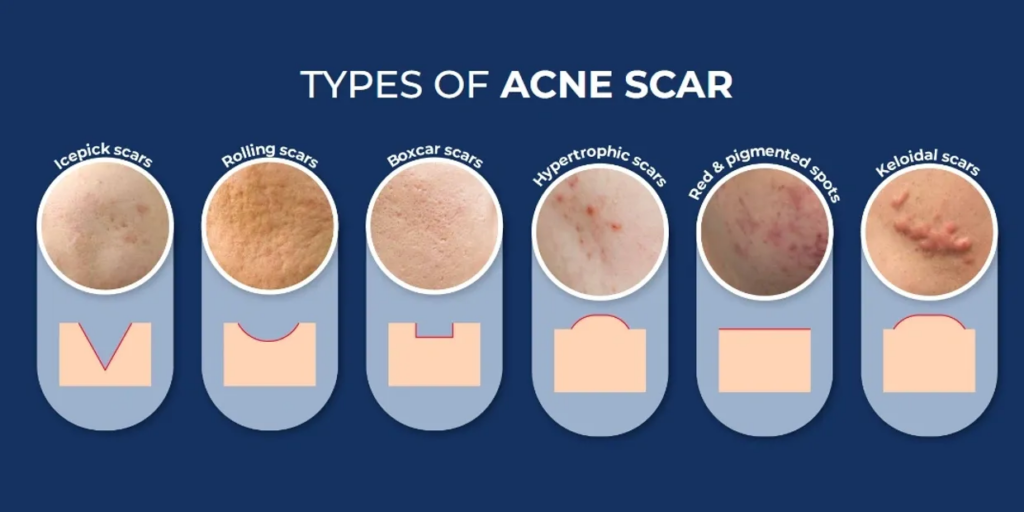
What type of acne scars do you have?
Different scar types respond differently to treatment.
Ice pick scars
These are narrow, deep scars that extend into the skin. They can be more challenging to treat because they penetrate deeper than the surface.
Rolling scars
Rolling scars create gentle undulations across the skin, giving an uneven appearance. They develop when fibrous bands beneath the skin pull the surface downwards.
Boxcar scars
Boxcar scars are wider depressions with defined edges. They vary in depth and often respond well to collagen-stimulating treatments.
Post-acne pigmentation
These are not true scars but areas of red or brown discolouration that remain after inflammation has settled. Improving skin cell turnover often helps these marks fade more quickly.
Many people have a combination of several scar types, which is why treatment plans are often personalised rather than relying on a single approach.
What is a chemical peel?
A chemical peel is a professional skin rejuvenation treatment that accelerates the skin’s natural renewal process.
Carefully selected acids are applied to the skin to remove damaged surface cells and encourage fresh, healthier skin to replace them. At Fountain of Youth, different peel formulations are selected depending on individual skin concerns, including ingredients such as lactic acid and salicylic acid.
Rather than simply exfoliating the skin, chemical peels help improve overall skin function by encouraging healthier cell turnover.
For patients with acne-prone skin, chemical peels may help to:
- Improve post-acne pigmentation
- Brighten dull, uneven skin tone
- Reduce blocked pores
- Improve mild textural irregularities
- Support healthier skin renewal
- Reduce excess oil in suitable patients
Chemical peels work primarily on the upper layers of the skin, making them particularly effective when pigmentation or superficial skin changes are the main concern.
What is microneedling?
Microneedling works differently because it targets the skin beneath the surface.
Using a precision device, thousands of tiny controlled micro-channels are created within the skin. These trigger the body’s natural healing response, stimulating specialised cells called fibroblasts to produce fresh collagen and elastin.
Collagen acts as the skin’s natural support structure. When acne has damaged this framework, the skin may heal with depressions and uneven texture. By encouraging new collagen production, microneedling gradually helps strengthen and remodel the skin over time.
Microneedling is commonly recommended for:
- Rolling acne scars
- Mild to moderate boxcar scars
- Enlarged pores
- Uneven skin texture
- Early signs of skin ageing
- Overall skin rejuvenation
Unlike treatments that focus mainly on the skin’s surface, microneedling works deeper within the skin, which is why improvements continue developing for several weeks after treatment as collagen remodels naturally.
Chemical peel vs microneedling: What’s the difference?
Although both treatments improve skin quality, they achieve this in completely different ways.

Which treatment is better for different types of acne scars?
Chemical peels are often better for:
- Post-inflammatory pigmentation
- Mild superficial acne marks
- Uneven skin tone
- Oily or congested skin
- Patients who continue to experience occasional breakouts
Because chemical peels encourage fresh skin cells to replace damaged ones, they are particularly effective for improving surface irregularities and discolouration.
Microneedling is often better for:
- Rolling scars
- Mild to moderate boxcar scars
- Enlarged pores
- Uneven skin texture
- Collagen loss following acne
Where acne has caused structural changes beneath the skin, stimulating new collagen is often more beneficial than resurfacing alone.
For milder cases, we would usually begin with the least invasive treatment capable of addressing the patient’s main concern. In more advanced cases, radiofrequency microneedling may be the best treatment by combining tightening and intense collagen stimulation.
Can chemical peels and microneedling be combined?
Yes, and they are often complementary rather than competing treatments.
Acne scars rarely present as a single concern. One patient may have pigmentation, enlarged pores and shallow rolling scars all at the same time.
Because chemical peels and microneedling target different layers of the skin, they are frequently used at different stages of treatment rather than as alternatives.
For example, if active acne, excess oil or post-inflammatory pigmentation are the main concerns, improving overall skin health with chemical peels may be the first priority. Once inflammation has settled and the skin is healthier, microneedling can then be introduced to stimulate collagen and improve the remaining textural scars.
At Fountain of Youth, treatment plans are tailored to the individual rather than following a fixed sequence. The most appropriate combination depends on the condition of the skin, the type of acne scars present and the goals of the patient.
Can acne scars be completely removed?
This is one of the most common questions patients ask.
Unfortunately, no treatment can completely erase every acne scar. The aim is usually to make scars significantly less noticeable by improving skin texture, encouraging collagen production and creating a smoother, more even skin surface.
The degree of improvement depends on several factors, including:
- The type of acne scars
- How deep the scars are
- How long they have been present
- Individual healing response
- Consistency with treatment and skincare
Many patients notice gradual improvements over several months as the skin continues to remodel following treatment. There are also more aggressive treatment options like laser resurfacing and deep chemical peels. None of which promise full resolution but the more aggressive the more potential for improvement but also equally the more downtime and risk for complications. This is a decision each person will need to make for themselves. At Fountain of Youth our approach is more gentle and focus on gradual improvements with less downtime and less risk but we can point you in the right direction for more aggressive treatments if needed.
Are there other treatments that may support acne scar improvement?
Acne scars are only one part of overall skin quality.
During consultations, we also assess hydration, collagen support and skin health because these factors influence how noticeable scars appear.
Depending on your individual skin assessment, treatments such as Skin Boosters may be recommended to improve hydration and overall skin quality. Where acne scarring is accompanied by more significant textural changes or skin laxity, Focus Dual RF Microneedling may also be considered as part of a personalised treatment plan. Medical-grade skincare can also play an important role in supporting skin repair and maintaining long-term improvements.
Rather than treating scars in isolation, addressing the overall health of the skin often produces the most balanced and natural-looking results.
Frequently Asked Questions
Is microneedling better than a chemical peel for acne scars?
Neither treatment is universally better. Chemical peels are generally more effective for pigmentation and superficial skin changes, while microneedling is often preferred for depressed scars caused by collagen loss.
Can chemical peels remove acne scars?
Chemical peels can improve mild acne scars and post-acne pigmentation, but deeper scars usually respond better to treatments that stimulate collagen production.
How many treatments will I need?
Most patients require a course of treatments. The number of sessions depends on the type of acne scars, their severity and how your skin responds over time.
Can I have treatment if I still have active acne?
Often, yes. However, if acne is still active, improving inflammation and skin health may be recommended before focusing on scar remodelling.
How long does it take to see results?
Chemical peel results are usually seen as the skin renews over the following weeks. Microneedling improvements develop more gradually because collagen production continues for several months after treatment.
Considering treatment for acne scars?
If you’re ready to improve the appearance of your acne scars but aren’t sure where to begin, booking a consultation is the best first step. A detailed skin assessment allows us to identify whether pigmentation, collagen loss, uneven texture or a combination of concerns is contributing to your scars, so your treatment plan is based on your skin rather than a one-size-fits-all approach.
At Fountain of Youth in Salisbury, every recommendation is tailored to your individual skin and long-term goals. Whether a chemical peel, microneedling or a personalised combination of treatments is most appropriate, we’ll explain your options clearly, answer your questions and create a treatment plan designed to achieve healthier, smoother-looking skin.
Book your consultation today and take the first step towards improving acne scars with personalised, doctor-led aesthetic care. We also welcome patients from across Wiltshire and the surrounding areas.